

 UK
 AU
 US
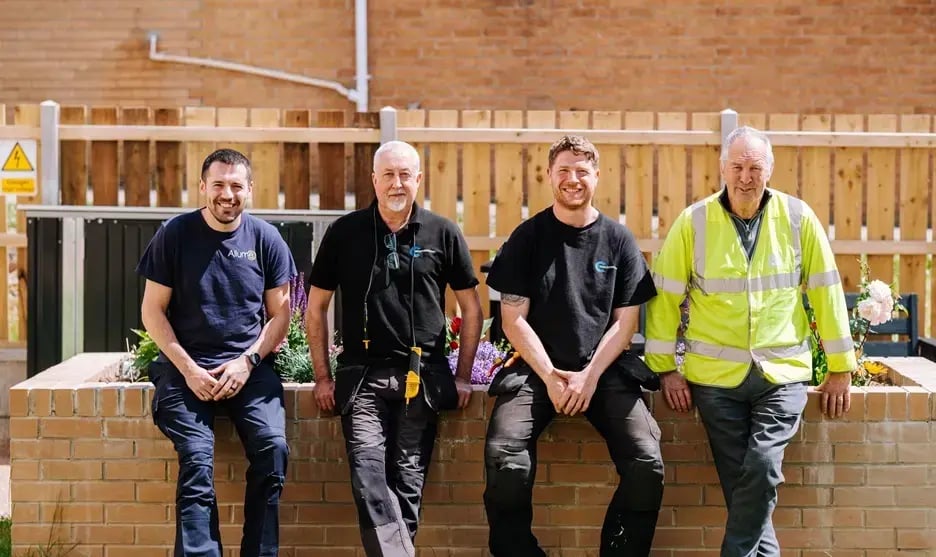

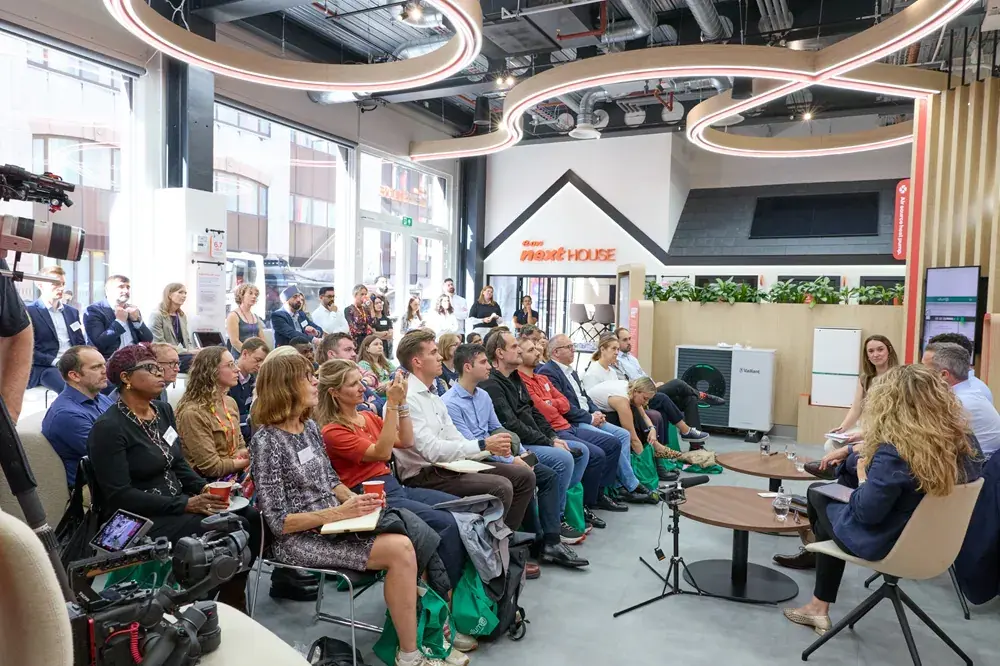
On 13th October 2026 we joined E.ON Next in London to show councils and housing associations how FlatSave cuts residents' bills and pays them for supporting the grid.
FlatSave pairs our SolShare technology with E.ON Next's grid flexibility. One rooftop solar system and one communal battery serve every flat in a block, so residents pay less for electricity and earn a payment when the battery helps the grid at busy times.
The showcase came at a useful moment for social housing retrofit. Forecasts put January's price cap close to £2,000 a year for a typical household, and Warm Homes funding is moving towards councils and combined authorities. The question in the room wasn't whether flats can have solar. It was how to bring it to every block of flats in a council's housing stock.
Here's what our speakers said, what the funding changes mean for flats and how to take the next step. New to FlatSave? Our September launch post has the full story.
What we heard at the showcase
Each speaker came back to the same point: people in flats have been left out of the energy transition for too long, and the tools to change that are ready now.
Chris Norbury, CEO of E.ON UK, set out why the partnership matters:
“We’re delighted to be here with our partners Allume, launching the FlatSave product, a first of its kind here in the UK.
“What I really love about it is that we’re working together to square the circle of affordability and sustainability for millions of people who live in apartments here in the UK.”
Ramona Vlasiu, Chief Operating Officer at E.ON Next, had a direct message for councils and housing associations:
“People living in flats have missed out on the benefits of the energy transition for too long. FlatSave is changing that, combining Allume’s technology with E.ON Next’s scale and flexible energy solutions to help residents lower their bills without needing to switch supplier. That’s what making new energy work for everyone looks like.
“For residents like Lorraine, this isn’t about technology for technology’s sake, it means no longer having to choose between heating and cooking. We are looking to take solutions like this to scale, and my message to housing associations and councils is simple: come and talk to us.”
Jack Taylor, General Manager Europe at Allume, spoke about what housing providers are asking for:
“The housing providers we work closely with want practical ways to bring cleaner, cheaper power to their homes without disrupting their residents. Generating solar power, storing that energy in batteries and trading with the grid is one of the most practical and impactful ways we can drive down bills for good.”
What housing providers told us
Councils and housing associations who joined us shared what solar and batteries are already doing for their residents, and why grid payments matter.
Rashida Kutubu, Senior Retrofit Manager at Peabody, which owns Harper Court, on what changed for its blocks:
“Before SolShare and FlatSave, we didn’t know how to bring solar to our blocks of flats. SolShare distributes energy across every flat based on what each household needs. With the addition of grid flexibility through FlatSave, we’re not just reducing bills, we’re putting money back in their pockets too.
“The feedback from the residents has been amazing. One of the things we promised them was to share information so they can see what the benefit is. Even though they can feel it, we can put it in actual data and tell them: this is what we promised, and this is what we’re achieving.”
Clifford Heaven, Decarbonisation Manager at Trivallis, on the systems already running in its sheltered housing:
“We’ve already got two of these systems installed in our sheltered housing complexes. The tenants love them. The bill savings were immediate. It’s reduced bills by up to 50% in a lot of cases. This has come off the tenants, not off us.”
Tania Jennings, Net Zero Carbon Manager at Lewisham Council, on cutting bills while fabric upgrades are planned:
“A lot of our residents are paying a fortune to heat their homes because they’re in old, inefficient homes. If nothing else, if we can get solar on and battery storage on, we can reduce their energy bills while we look at what we can do about the fabric.”
Meghan Kingsley-Walsh, Heat Decarbonisation Manager at Hammersmith & Fulham Council, on why grid payments matter:
“If we have an income stream, then we can scale it up a bit more and ultimately more people will benefit. So this feels like the perfect next step for us.”
Watch highlights from the showcase, including what councils and housing associations told us.
Harper Court: FlatSave in a block people live in
The first FlatSave system is running at Harper Court in Stevenage, a Peabody block of six flats. A 15kW rooftop solar system and an 18kWh communal battery serve all six homes.
Our SolShare technology makes this possible. It connects the one solar and battery system to each flat's existing meter, so everyone gets their fair share of the solar. Nothing is installed inside homes, and residents keep whichever energy supplier they already use.
The battery charges when electricity is cheapest, then supplies the flats or the grid when demand peaks. Residents who join the battery flexibility programme can receive:
- up to £160 a year if they're E.ON Next customers
- up to £80 a year if they're with another supplier
These payments are estimates rather than guaranteed amounts. On top of them, our modelling from 12 months of metered data at a SolShare and battery site in Cardiff shows savings of up to 60% on residents' annual electricity bills. Savings vary by building, tariff and household use.
Lorraine, a resident at Harper Court, has felt the difference:
“Having extra money in my bank has been brilliant. Seeing my bills drop has brought real peace of mind. With the panels and FlatSave, I no longer have to constantly watch my energy use or switch devices on and off, which has made my life so much easier.”
More FlatSave projects with housing associations are planned across the country.
See FlatSave in action: watch the Harper Court case study.
What devolved Warm Homes funding means for flats
Councils are about to have more say over where retrofit money goes. The government's Warm Homes Plan, published in January 2026, gives local authorities and mayoral strategic authorities a central role in delivery.
From 2027/28, the Warm Homes: Social Housing Fund is due to combine with the scheme for low-income private homes into a single fund of around £1 billion a year. That fund is set to take an area-based approach that works across tenures. In Greater Manchester, social housing retrofit funding already runs through the combined authority rather than the national scheme.
For councils, that means planning upgrades area by area, across council flats, housing association blocks and private flats side by side. Flats have often been left until last, because rooftop solar couldn't be shared fairly between homes. Our SolShare technology removes that barrier, and SolShare installations are already accepted under the Warm Homes: Social Housing Fund.
For a fuller view of funding routes, read our Warm Homes Plan guide for social housing.
Bringing solar and batteries to every block of flats
The opportunity is large and mostly untapped. According to the 2021 Census, more than 5 million households in England and Wales live in flats, and the English Housing Survey finds almost half of social renters do. Yet based on MCS installation data and ONS figures, only around 3% of flats have rooftop solar.
Councils and social landlords oversee an estimated 2.3 million flats. Treating the housing stock as one programme, rather than one block of flats at a time, is how that number starts to move. FlatSave suits that approach because:
- every flat benefits, whichever supplier the resident uses
- nothing goes inside homes, so there's no disruption for residents
- everyone gets their fair share of the solar, through our SolShare technology
- the battery earns its keep, paying residents for supporting the grid
- ratings improve, with solar and batteries helping lift EPC and SAP scores across every block
Our SolShare technology is already installed on more than 5,000 homes in the UK, with dozens of housing associations. Adding a communal battery for social housing flats through FlatSave builds on that same proven approach, block after block.
Find out if FlatSave could work for your properties
If you manage blocks of flats as a council or housing association, we'd like to help you see what's possible. Tell us about your buildings and our team will assess whether they suit SolShare and a communal battery, and what residents could save.
As Jack put it at the showcase:
“Any local councils or housing associations that have flats in their portfolio, I’d encourage them to get in touch with us, and we can help discuss what funding options are available to get solar, battery, SolShare and FlatSave installed on their properties.”
Request a FlatSave assessment