

 UK
 AU
 US
Community battery storage for blocks of flats: cut energy bills by up to 60%
A community battery is one battery shared by every flat in a block. Our SolShare technology stores daytime solar in it and shares it in the evening, with nothing installed inside residents' homes. Built for social housing and private developments, in both retrofit and new-build blocks.
Book your assessment
Reach out to our technical team if you have a battery storage project in the works.
Why flats miss out on battery storage and cheaper power
Traditional solar and battery systems are designed for houses, leaving millions of UK flats behind in the energy transition.
Flats generate solar power at midday but use most electricity in the evening. Without storage, surplus energy is exported. Individual batteries are often impractical due to space, cost and maintenance.
SolShare changes that. A single communal battery stores surplus solar power and shares it with flats when they need it most.
How a community battery works with SolShare

Day
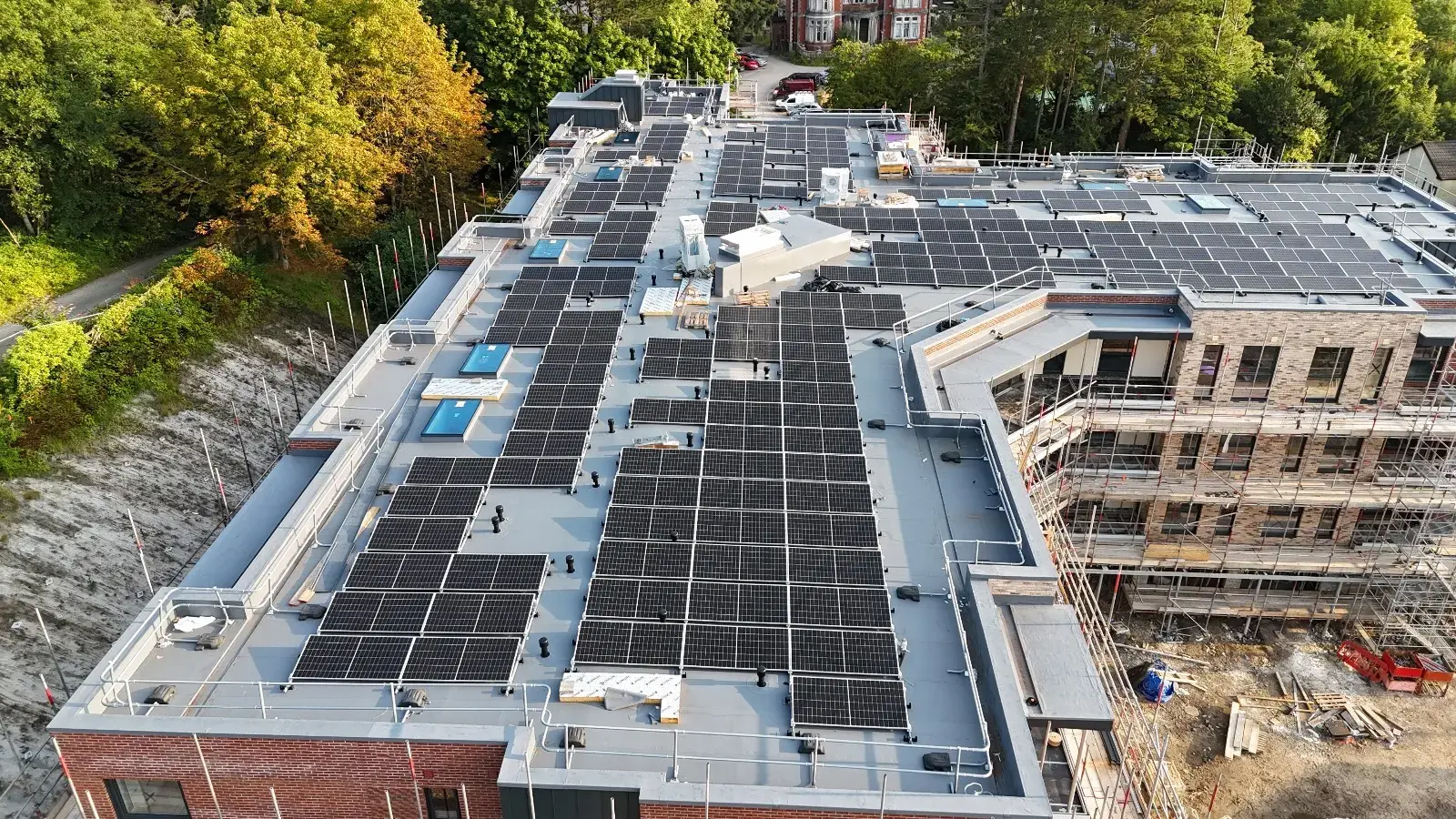
SolShare takes the solar energy generated from the roof and powers the flats that are using electricity and charges the community battery with the surplus.

Evening
When the sun goes down, the battery releases the stored solar and SolShare shares it with the flats using power. Residents buy less electricity from the grid when demand is highest.

Every day
SolShare intelligently manages solar and stored battery energy, distributing it across flats when residents need it most, so everyone gets their fair share and makes the most of the solar generated on their building.
What battery storage adds to your social housing or new build development
| Up to 60% lower tenant bills |
|---|
|
Against up to 40% with solar alone, because evening demand is now met from stored solar instead of the grid. |
| Far more of the solar used on site |
|---|
|
Less export, more self-consumption, and a stronger return on the same rooftop array. |
| One asset to install and maintain |
|---|
|
A communal DC-coupled battery in the plant room or at ground level, not 60 units in 60 flats. |
| Fundable |
|---|
|
Solar + battery is delivered under Warm Homes Plan and ORP funded schemes. |
Community battery & grid flexibility case study
Housing provider |
Flats |
Solar |
Battery |
Peabody |
6 |
15kW |
18kWh |
The challenge
In a house you can add solar and a battery. In a block of flats, residents often can’t access the roof or have no space or budget for a battery.
What was installed
Funded by E.ON Next, SolShare was installed to connect all flats to a solar PV & communal battery system behind the meter.
The results
-
Increased flats’ EPC ratings, 10-20 SAP points.
-
Energy bills down significantly.
-
A credit buffer built up for winter.
-
Straightforward, non-disruptive installation with no hardware inside homes.
See what the residents are saying
“I was having to choose between putting the heating on versus using the oven. The solar and battery system means I don’t have to choose between cooking and staying warm.”
Peabody' Harper Court resident
The impact of Allume's SolShare
Flats connected worldwide
30 new households connected every day
of solar energy produced worldwide
Boost SAP points
Reduction in electricity bills
Explore our solutions
SolShare supports a range of housing and development projects.

See how much a battery adds to your block
We’re here to help assess technical suitability and ensure the solshare system is designed to deliver the best possible results for your project.
Reach out to our technical team if you have a battery storage project in the works.
Frequently asked questions
Find quick answers about SolShare & battery.Yes. SolShare integrates seamlessly with communal DC-coupled battery systems. SolShare shares the stored solar across the flats in the evening, so everyone in the block gets their fair share.
A community battery is one battery shared by every flat in a block. It stores the rooftop solar the building doesn’t use during the day and releases it in the evening. Our SolShare technology shares that stored solar fairly between flats, even though each one has its own meter.
A community battery goes in a fire-safe communal location, such as a plant room or an external enclosure at ground level. Nothing is installed inside residents’ flats. We confirm the exact location at the site assessment.
Battery size depends on the block: the size of the rooftop solar array, the number of flats and how much electricity residents use in the evening. We model this before we quote. At Harper Court in Stevenage, six flats share a 15kW solar array and an 18kWh battery.
At Odet Court in Cardiff, SolShare connected 24 flats to 2 rooftop solar PV systems and 2 community scale batteries to affordable energy without residents needing to switch supplier.
(2 SolShare units, 64 kWp solar, 60 kWh battery).
Delivered 60-70% reduction in grid energy use and £560-690 yearly bill savings per flat.
No. SolShare shares the solar and stored battery power automatically. Residents keep their own meter, supplier and tariff.
Yes. The battery goes in a fire-safe communal location, never inside a flat.
SolShare & batteries qualifies for major UK grants, including the Warm Homes Plan in England, Optimised RetroFit Programme (ORP) in Wales and the Local Power Plan.
Yes. SolShare and a shared battery suit both new-build and retrofit schemes. Planning the battery space at design stage makes the install simpler.
Grid flexibility means the block’s battery charges when demand is low and supports the grid at peak times. Through FlatSave, from E.ON Next and Allume, residents who opt in could earn up to £160 a year with E.ON Next, or up to £80 with another supplier.