

 AU
 UK
 US


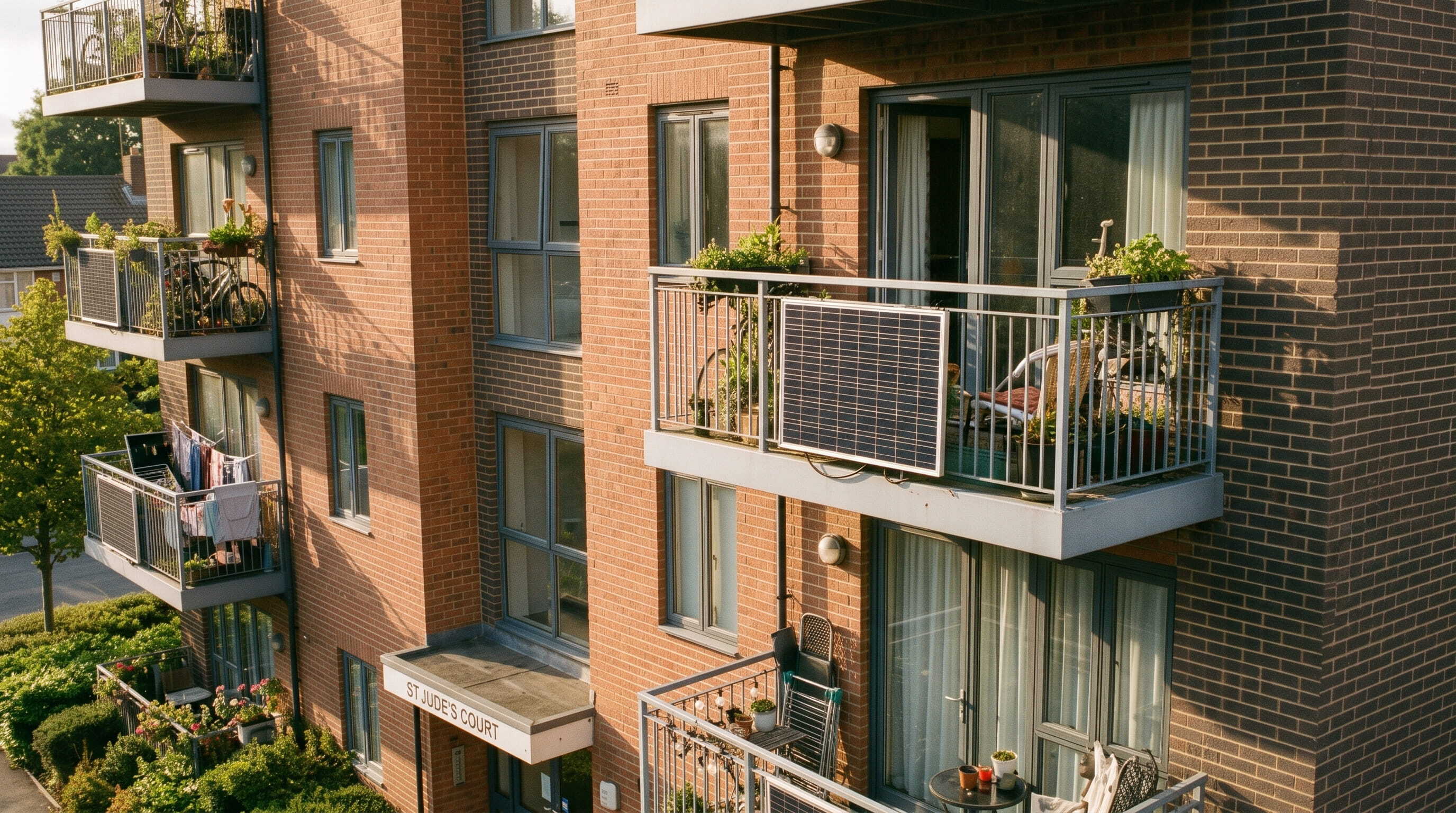
If you live in an apartment, you've probably seen plug-in solar in the headlines: panels you hang off a balcony and plug into a power point to start cutting your electricity bill.
Whether plug-in solar is coming to Australia matters to the millions of people who've been locked out of rooftop solar, and the buzz since the UK legalised plug-in kits shows how much demand there is for options that include apartment residents. At Allume, we welcome any option that brings cleaner, more affordable energy into apartments.
Some have also argued that plug-in solar finally fixes the 'split incentive', where landlords would pay for solar but tenants would get the savings. Here's where plug-in solar stands in Australia, what a balcony kit can and can't do, and how our SolShare technology can bring solar savings to your whole building today.
Is plug-in solar legal in Australia?
Technically, you can already buy plug-in kits online. The catch? You can't legally plug one into a power point in Australia. In September 2026, the Energy and Climate Change Ministerial Council agreed to explore pathways for the safe use of plug-in energy devices, including solar and batteries, with the Commonwealth reporting back to ministers this year.
There are good reasons to go slowly. Many older safety switches in Australian homes aren't designed for the type of current some plug-in batteries produce, which can prevent them from detecting a fault, and there are reports of people already using unapproved plug-in batteries.
For panels, the bigger hold-up is the rules. Any solar kit that feeds power into a building's wiring needs an inverter (the device that turns panel power into the electricity your home uses), and inverters must meet Australia's installation standard, AS/NZS 4777.1. That standard assumes a licensed electrician makes the connection, and changing a national standard takes formal consultation. State strata and tenancy laws also decide whether you can attach anything to a balcony, and your owners' corporation (the body that manages a strata building's shared property) gets a say.
Advocates for plug-in solar and batteries want a firm deadline for when it will be legal in Australia. Solar Citizens is campaigning for plug-in energy tech to be legal by mid-2027 – though, with a national standard to change, that may be a tight timeline.
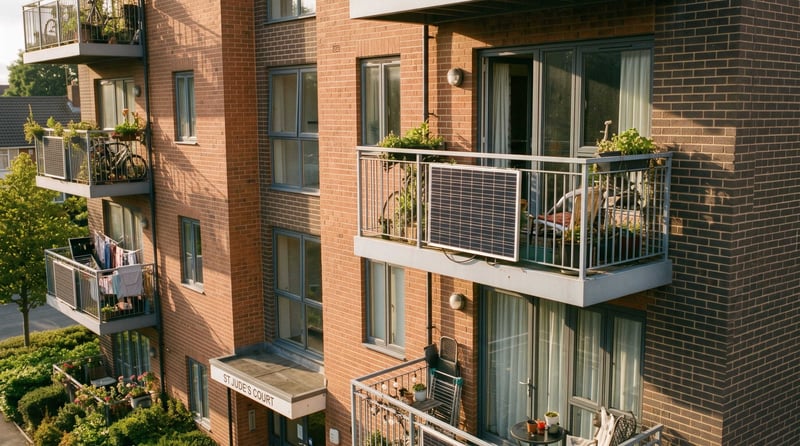
What a plug-in balcony solar kit can realistically do for an apartment
Plug-in solar puts power back in individuals' hands, including renters. Being able to buy a solar panel or battery, plug it in and start cutting your own bill is a real step forward, and because the kit is yours, it moves with you when you move.
But there are limits. One or two panels only go so far, because their power only reaches whatever is running at the time – the fridge, the router, the TV. And because kits aren't connected to your meter panel, anything you don't use straight away is lost, unless you add a battery.
In the UK, where kits are already on sale, Carbon Brief found that a typical kit could cover roughly 15% of a two- to three-bedroom London home's electricity use. According to Solar Citizens, systems like these produce around 600–800 watts and could save Australian households roughly $300 to $400 a year off their energy bill at current tariffs.
Which way your balcony faces matters just as much. A kit makes the most sense if your apartment has its own north-facing balcony that isn’t shaded for much of the day, someone is home during daylight hours (or you set appliances to run then), and your owners’ corporation allows fixtures on balconies or building exteriors.
If your balcony doesn't meet those conditions, a plug-in system won't shift your bill much. That's not a flaw in the technology – it's the physical limit of one or two panels on a single balcony. The two aren't mutually exclusive, though: once the rules allow it, a resident with a sunny balcony could run a kit alongside a rooftop system.
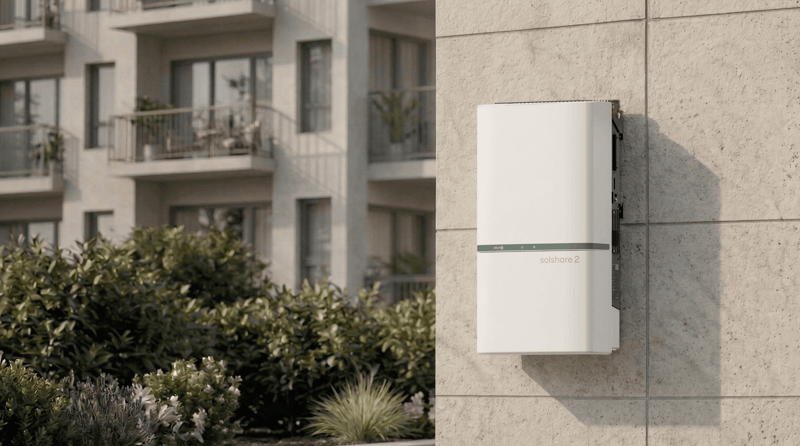 SolShare won the 2026 Australian Good Design Award of the Year
Why SolShare does more – for you and your building
Our SolShare technology connects one rooftop solar system to every apartment in your building and the common areas, and fairly shares the solar among residents – owner-occupiers and renters alike. It's already delivering bill savings of roughly 30–40% for residents, and up to an estimated 80% with a shared battery, according to our customers’ SolCentre data.
And because the panels sit on the roof, your savings don't depend on which way your balcony faces, or whether you have one.
A rooftop system is also many times larger than a balcony kit, and our SolShare technology is built to maximise solar consumption, so far more of the solar stays in the building instead of going back to the grid – around 15–20% more than the same system on a standalone home. A shared battery further improves consumption because residents can use solar generated throughout the day in the evening, when rates tend to be higher, and more of the grid’s power comes from fossil fuels.
SolShare also tackles the ‘split incentive’: landlords add value to their property and can help reduce strata fees through common-area savings, while tenants see savings directly on their own bill.
In October, SolShare was named the 2026 Australian Good Design Award of the Year, with the jury calling it 'an important innovation that addresses a significant gap in the clean energy transition', and more than 13,000 apartments are now connected to solar through SolShare – just about doubling in the past year.
Plug-in solar vs SolShare at a glance
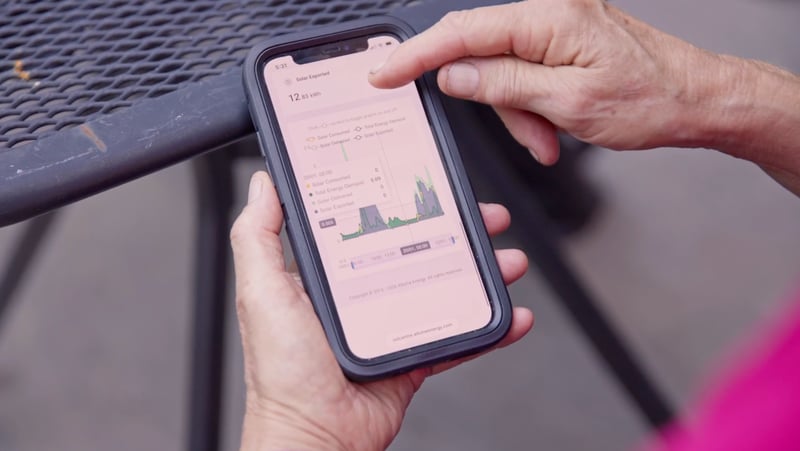 Wendy, a SolShare customer in NSW, views solar data for her unit on her SolCentre dashboard. Read Wendy's case study.
What would make the biggest difference for apartment residents
Stronger funding and clearer strata voting rules would help more apartment residents, sooner, than any single new product. Millions of Australians live in apartments, and shared solar is already reaching more of them, but there’s still more work to do.
Two states (plus the ACT) already fund shared solar for apartments, and NSW shows what’s possible. Its rebate program started in February 2025, a year after Victoria’s, yet it has paid out roughly 35% of its $30 million in about 18 months. Victoria has paid out roughly 25% of its $32 million in about 2.5 years, and still has more policy barriers, such as higher strata voting thresholds to pass sustainability measures like rooftop solar.
Plug-in solar is a welcome addition, but it could distract from reforms that would help far more residents. "Plug-in solar and batteries have great potential to close the gap for people who've been locked out of renewable energy," says our CEO, Cameron Knox. "But Australia's standards don't change quickly. The real risk is that people believe plug-in solar is just around the corner, and governments treat the problem as solved because they've announced it. That stalls action on the options apartment residents can use today."
Here's what we're asking governments to do:
- keep the NSW and Victorian apartment programs funded rather than letting them lapse (currently, the $32 million Victorian rebate program expires in June 2027 while the NSW SoAR program ends in December 2026),
- extend equivalent support to Queensland and South Australia,
- lower or clarify strata voting thresholds in states where just a few objections can stall a building-wide upgrade,
- require energy performance disclosure for rentals, so landlords and renters have the same reasons to invest (in the UK, minimum energy efficiency standards for private rentals already give landlords that reason),
- amend the federal Cheaper Home Batteries Program so apartment buildings can more easily access shared storage and the extra savings that come with it.
We've set out our position in more detail in our apartment solar affordability recommendations. Plug-in solar belongs in the toolkit – it just shouldn't become the reason the harder reforms get parked.
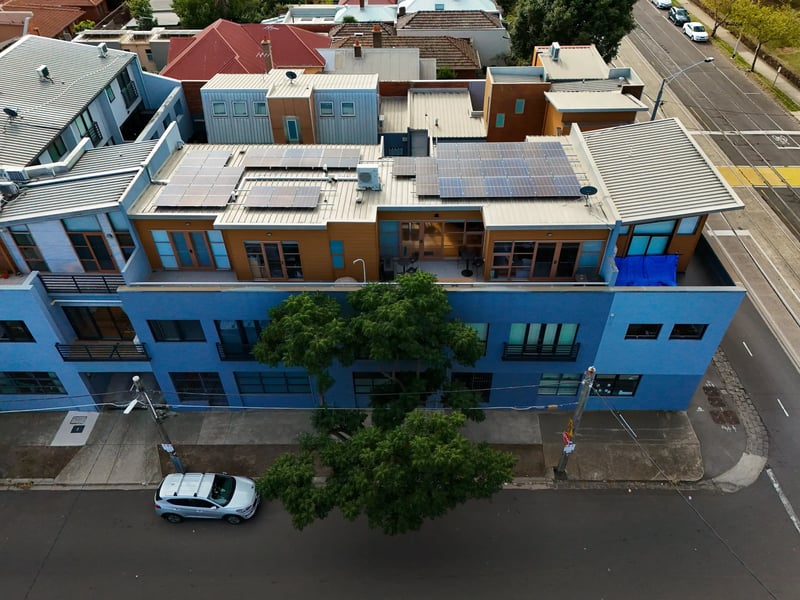 Strata-titled apartment building in Ascot Vale, VIC with SolShare installed, reducing residents' energy bills.
What your building can do while the rules catch up
You don't have to wait for plug-in solar to bring solar savings to your building, because rebates already make SolShare far more affordable. In many buildings, the cost can come down to roughly $1,400 to $2,000 per apartment after federal incentives and state grants, though costs vary with apartment count, roof material and your state. For the full picture, read our complete guide to solar for apartments.
In Victoria, the Solar for Apartments program offers rebates of up to $2,800 per apartment, or up to $140,000 per building, until 30 June 2027. In NSW, the Solar for Apartment Residents grant covers around half the cost of a shared system up to a capped amount, with up to 80% covered for eligible suburbs, with applications closing at 5 pm on 4 December 2026. Federal and local solar incentives can further reduce the upfront cost.
The quickest way to see what this may look like for your building is to request a free feasibility assessment.
We'll show you what your roof can support, what it would cost per apartment after rebates, and the estimated bill savings for each resident in your building.