
 AU
AU
 UK
UK
 US
US


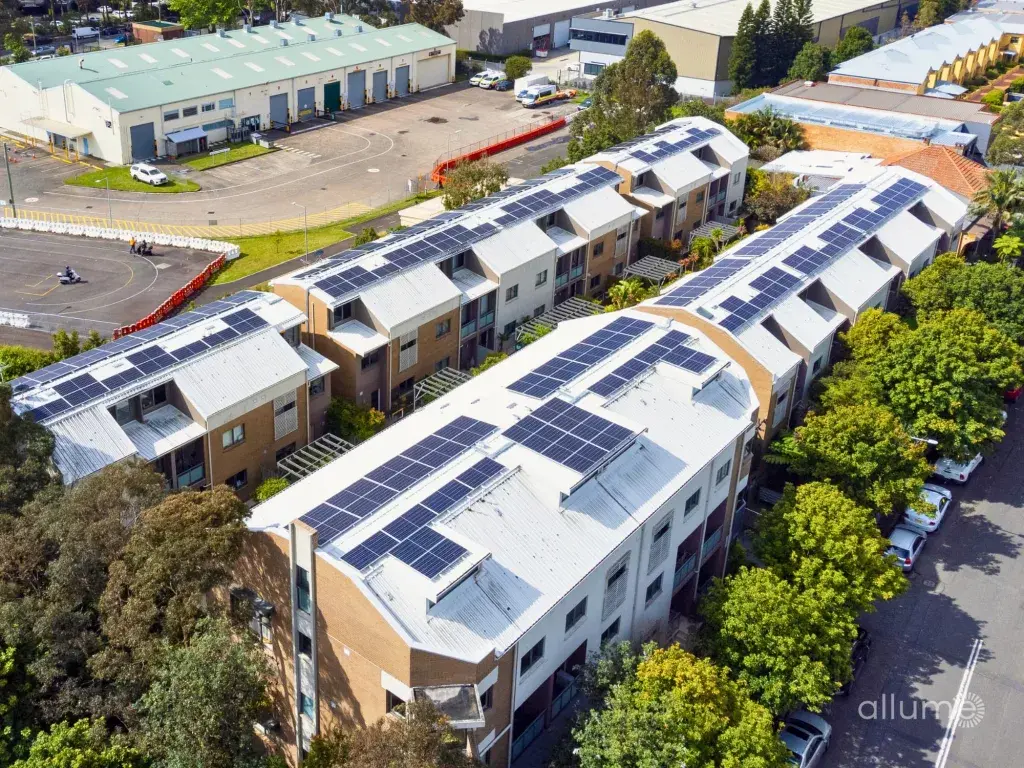
How recent reforms have made sustainability more accessible – and why now is the time to act
Over the past few years, the New South Wales government has laid the groundwork to put sustainability on the agenda (literally). Voting changes in 2021, the 2025 Strata Scheme Amendments, and the NSW Solar for Apartment Residents (SoAR) grants have combined to create an appealing opportunity for owners’ corporations and strata managers with an interest in sustainability upgrades.
By installing a shared solar system that’s partially funded by grants, you can both meet the new requirements and also reap the long-term benefits of solar – lower energy costs for residents and increased property values.
In brief
The changes making sustainability more accessible to strata schemes include;
- The Strata Schemes Management Amendment (Sustainability Infrastructure) Act 2021 made it easier for sustainability infrastructure resolutions to pass. Under this category, a resolution passes when less than 50% of unit entitlements vote against it, replacing the previous 75% threshold.
- The Strata Schemes Legislation Amendment Act 2025 included three significant changes. They banned by-laws prohibiting the installation of sustainability infrastructure based on appearance, added requirements for owners’ corporations (OCs) to budget for sustainability infrastructure in the annual capital works fund, and mandated that sustainability be included on the Annual General Meeting (AGM) agenda.
- The Solar for Apartment Residents (SoAR) program provides grants of up to $150,000 per solar system project. Applications are open until 4 December 2026.
The three key reforms explained
Among the key changes in the 2025 reforms, several aim to encourage the uptake of sustainability.
First, before 2025, strata schemes were able to create by-laws that would prevent the installation of sustainability measures like EV chargers or solar panels, based on the determination that their appearance negatively impacts the building. These by-laws are now banned, with exceptions for heritage-listed buildings, removing a roadblock to proceeding with sustainability projects.
Second, OCs are now also required to consider the costs of sustainability infrastructure in their annual capital works budgets. There are many opportunities to meet this requirement, including budgeting for the repair or replacement of existing infrastructure – such as replacing light bulbs with energy-efficient LEDs – or for the installation of new infrastructure, such as rooftop solar. The complexity that often comes with the installation of new infrastructure means that it’s good practice to seek advice from professionals. For rooftop solar in apartments, that's us! Read on to see how Allume can help.
Third, the OC is now required to ‘consider’ sustainability at each AGM and to include it as a standing agenda item for all future AGMs. In practice, ‘consideration’ means a discussion related to annual energy and water consumption. Discussing the installation of a shared solar system would meet the sustainability requirement – and right now is the perfect time to put solar on your agenda.
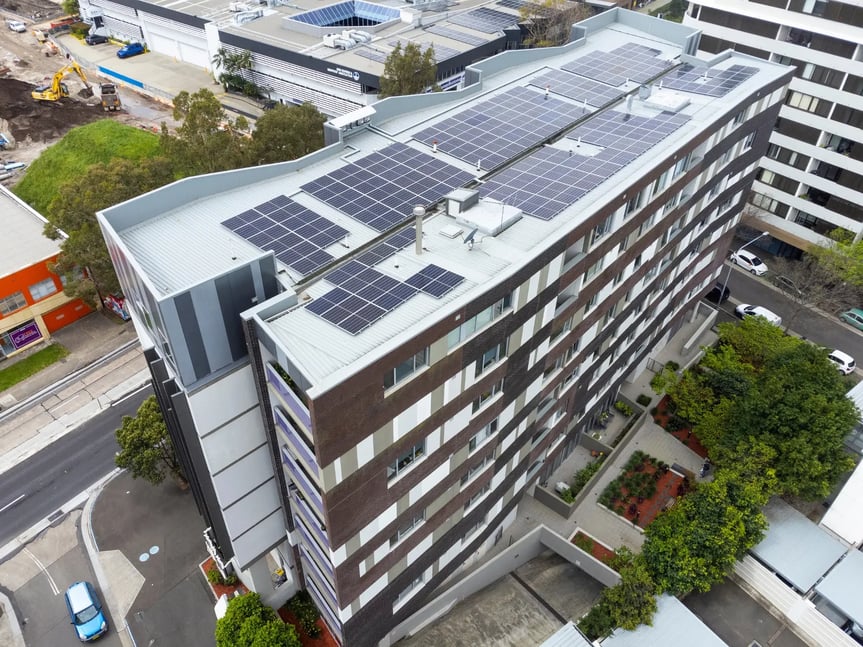
Why now is the time to act
One reason to act now is that gaining approval for sustainability-related building improvements is significantly easier than in the past. Under the 2021 amendments, sustainability infrastructure resolutions now pass if less than 50% of the votes cast are against the resolution. Previously, only 25% of votes cast against would cause a similar resolution to fail.
Another is that the NSW Solar for Apartment Residents (SoAR) program – which opened for applications in February 2025 – is available to help fund rooftop solar projects on apartment buildings in NSW. According to the program’s website, between July 2025 and July 2026, 189 people living in apartments received over $ 8 million in funding for solar projects.
The NSW SoAR grants are for up to $150,000 per project – with a ‘boost’ grant for specific suburbs receiving up to $200,000 per project – and include all of the materials and installation related to a solar installation, including some enabling works. For a committee weighing up adding a solar system installation to the capital works budget, grant funding changes the numbers significantly. The funding lowers the average total installation cost of a system by 71%, based on estimates from real Allume installations.
The key thing to remember about the SoAR program? Applications close 4 December 2026.

Why solar for apartments makes sense
In NSW, apartment residents make up one in five homeowners, yet only 3.5% of apartments have rooftop solar compared to more than 30% of houses. The strata scheme amendments and grant program are NSW’s response to this – a recognition of the need to make solar more accessible to everyone.
This opportunity has created a growing momentum behind solar installations in NSW, aided by our innovative technology – SolShare.
SolShare is our world-first smart hardware that takes energy from a single rooftop solar system and shares it fairly among multiple apartments. The hardware was developed right here in Australia, and, as of April 2026, has been installed on more than 10,000 apartments worldwide.
Rooftop solar for apartments makes sense for more than just sustainability reasons: it is proven to be a good investment. It delivers bill savings directly to residents, lowering energy costs by up to 60% according to data from real SolShare users using our monitoring platform, SolCentre. Rooftop solar also raises property values, according to Domain, by an average of $75,000 per unit.
Getting solar onto your AGM calendar
When drafting the agenda for your next AGM, the natural answer is to add shared solar via SolShare.
In preparation for the meeting, speak to our helpful team about providing a free, no-obligation desktop solar feasibility assessment. It looks at the realities of installing solar on your building and includes a cost estimate to satisfy your capital works budgeting requirement. A typical feasibility assessment includes:
- Recommended system size and expected output
- Projected savings per apartment and for the building overall
- Estimated installation costs, which will vary by system size and building complexity
- Savings estimates for any available rebates, such as the NSW Solar for Apartment Residents grant
We also offer Q&A sessions for owners’ committees and coordinate with your strata manager, guiding them through the full process. We can even attend your AGM to help facilitate the vote!
Ready to add rooftop solar to your next AGM agenda? The next step is simple: start with a feasibility assessment.