

 UK
UK
 AU
AU
 US
US

As June draws to a close, the industry is marking European Solar Day and Climate Action Week, two opportunities to recognise and celebrate progress in clean energy as we move towards a lower-carbon future.
But this year, the arrive just before a significant update in the UK. With Ofgem’s energy price cap set to rise again from the start of July, the urgency to make clean, affordable energy accessible to more households has never felt more important.
On 1st July, the price cap is set to increase by 13%, marking the largest single increase since the peak of the energy crisis in 2022, adding an estimated £180 to typical annual household bills.
This increased financial strain on British families comes as recent reports show the average UK household now owes £750 in energy debt, a 50% jump from last year. As bills climb higher again this summer, long-term solutions are more important than ever.
While the sun's power is an abundant, free resource, the financial benefits solar energy can provide isn’t being distributed equally among everyone in the UK. Historically, the country’s rooftop solar revolution has been heavily skewed toward standalone, single-family homes, with apartment residents missing out on the benefits.
As Jack Taylor, General Manager for Europe at Allume Energy, explains:
"Families living in flats are among those hardest hit by rising energy prices, yet they remain among those with the fewest options available to protect themselves. The honest truth is that the most effective long-term protection against rising bills is generating your own electricity through rooftop solar.
“Despite this, just 3% of UK flats have solar, compared with 7% of houses. That’s why we’re working with social housing landlords and property developers to bring rooftop solar to as many flat residents as we can."
With traditional solar infrastructure built around houses, multi-family apartment blocks have faced structural and financial barriers to entry, leaving the majority of the millions living in flats vulnerable to energy market volatility.
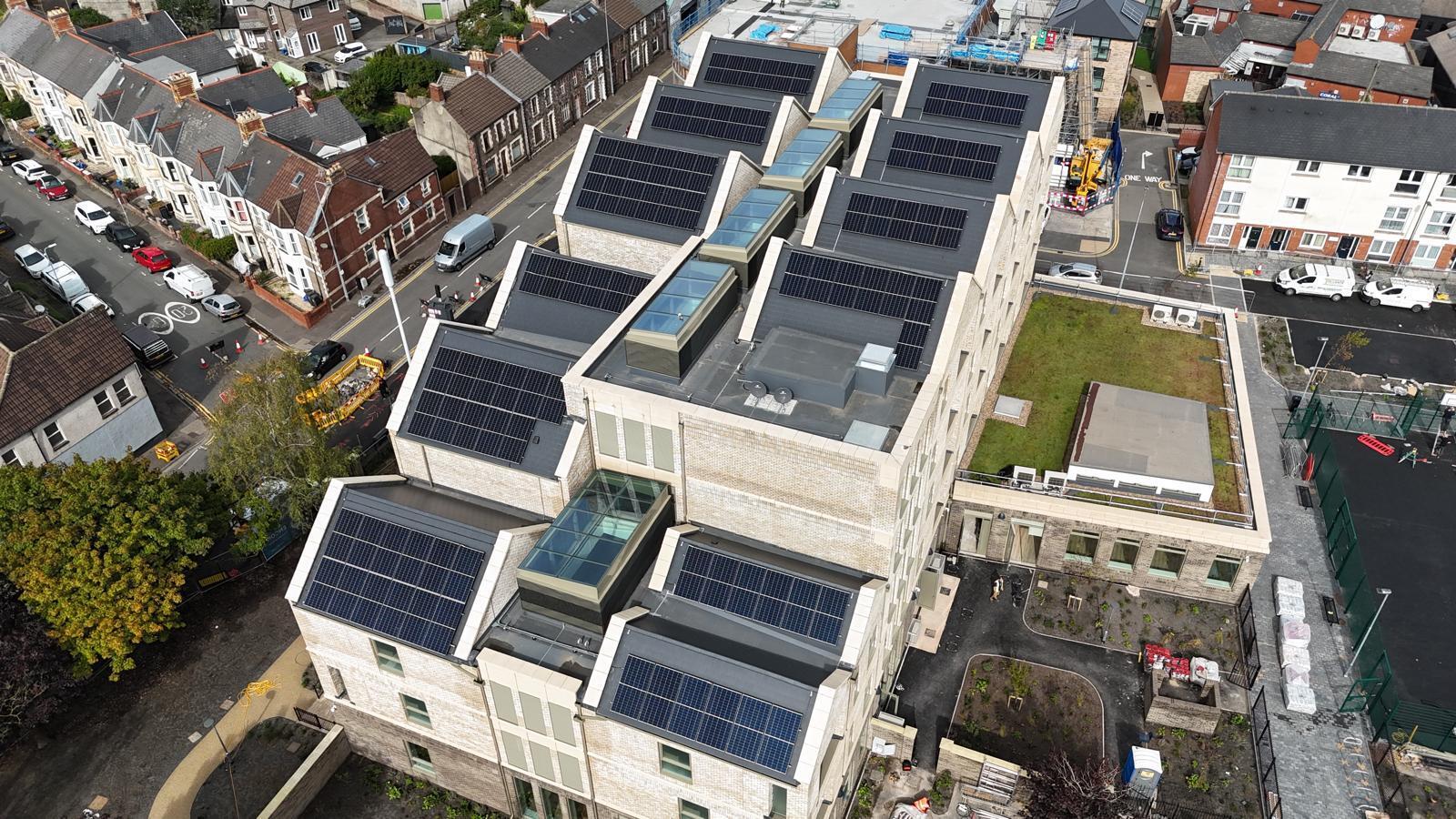
As the world’s first technology that allows multiple apartments within the same building to share a single rooftop solar array, Allume Energy’s SolShare technology tackles the issue head on.
Instead of slicing a roof into inefficient, segregated zones, SolShare distributes clean power in real-time to the apartments using electricity at that exact moment. This ensures that maximum solar energy is used directly within the building rather than being wasted. It can also be incorporated into retrofits for existing social housing buildings or integrated into new-build developments to meet building standards.
By removing the need for complex hardware, the technology delivers a powerful financial impact straight to the households that need it most, cutting individual residents’ electricity bills by up to 40%.
When paired with localised battery storage, annual savings can be elevated to 70%, up to £700 per household, per year. And unlike rigid centralised setups, tenants retain total freedom to choose and switch their energy providers.
June’s awareness days are timely reminders of what is possible when we prioritise clean energy. However, true progress should be measured by how effectively and equitably we can shield the most vulnerable in society from rising costs.
Jack continues:
"The same sun falls on every roof in the country. It's time the savings underneath reached everyone, not just those who happen to own their own house."
By embracing shared solar infrastructure, social housing landlords, local authorities and property developers have a chance to take direct action.
Are you ready to protect your residents from rising energy costs and future-proof your buildings? Click here to connect with the Allume UK team today to learn how SolShare can unlock solar for your portfolio.
Case Study: Odet Court, Cardiff
We don’t have to speculate about the potential of pairing shared solar with community storage, as we are already seeing proven success in action.
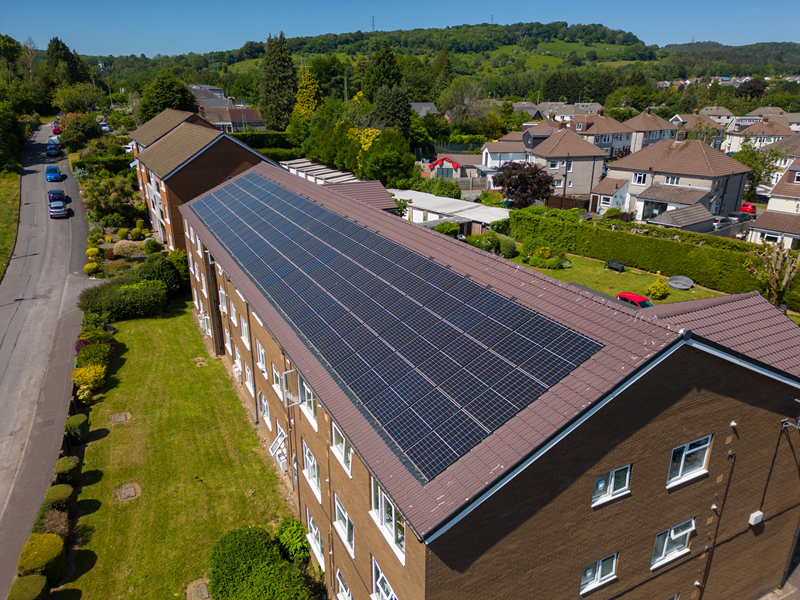
In 2022, Allume supported Wales & West Housing to carry out a pioneering retrofit at Odet Court in Cardiff, a project funded through the Welsh Government’s Optimised Retrofit Programme (ORP). Because of the building's physical footprint, standard individual solar systems were entirely impractical for the 24-flat block.
Instead, the project used SolShare to connect two rooftop solar PV systems and two community-scale batteries directly to all 24 flats. Residents began sharing locally generated solar power and stored energy directly, without the need to switch their energy suppliers or install complicated equipment inside their own homes.
The real-world data from Odet Court shows what community-scale infrastructure can achieve:
- Grid energy reduction: Tenants have successfully cut their reliance on grid energy by 60 to 70 per cent.
- Future potential: Ongoing refinements could potentially push grid reliance down by as much as 80 per cent.
- Financial relief: The pairing delivers direct bill savings of between £560 and £690 a year per flat.
As Ramin Hakimov, Head of Commercial and Policy at Allume Energy, comments:
"Projects like Odet Court show the impact shared solar and battery storage can have for communities across the UK and particularly for social housing... Shared solar and community batteries are an ideal pairing to ensure the clean energy transition reaches the people who need it most."
As the government evaluates the business case for expanding community energy storage, scaling these systems safely is a key priority. For residential-scale retrofits to protect consumers, installations must align with fire safety guidelines, specifically the Publicly Available Specification (PAS).
This specification helps manage hazards associated with stationary batteries through a few critical safety pillars:
- Strict enclosure specifications: Batteries must use non-combustible enclosures containing overcurrent protection alongside the cells to limit arc faults.
- Rigorous risk assessments: Battery assemblies must explicitly declare arc flash incident energy levels to ensure they are suitable for domestic installations.
- Smarter failure isolation: Systems must feature advanced management tools capable of monitoring and isolating dangerous thermal or internal faults.
- Strategic, safe placement: Batteries must be kept clear of primary escape routes, habitable rooms, or unventilated voids to reduce any potential fire impact.
The government's call for evidence is a historic opportunity to reshape the country's approach to local energy. If we are to successfully target fuel poverty, we must look beyond single-family households. By combining rooftop solar and community storage, we can build a future that benefits everyone.
Are you a landlord or social housing provider looking to future-proof your properties with shared solar and storage? Connect with the Allume UK team today to find out how we can support your next project.