

 UK
UK
 AU
AU
 US
US

Solar… coming to a ‘Middle of Lidl’ near you!
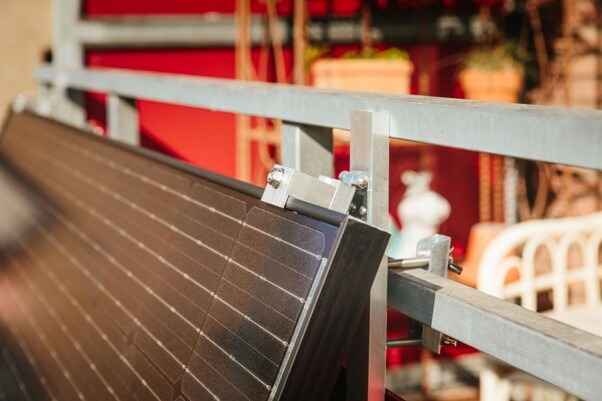
From 27 August, plug-in solar becomes a legal, over-the-counter product across England, Wales and Scotland, available in major high-street supermarkets, DIY home stores and online at marketplaces like Amazon.
Following a DESNZ consultation, a new legal category of "plug-in microgenerator" has been created, which allows a certified kit purchased online or on the high-street to be connected to a standard three-pin socket without the need for an electrician, dedicated circuit, scaffolding or rewiring.
The new rules will see output capped at 800 watts at the inverter, with panel capacity up to 2,000 watts. The kits must also be certified as a complete package against the department's Interim Product Specification and verified on the ENA Type Test Register, so panels and an inverter bought separately will not qualify.
The good news is homes can self-install, but residents will still need to notify their local Distribution Network Operator (DNO) within 28 days (under G98). To ensure a smoother pass for the legislation, batteries are excluded, for now at least.
The move is a really welcome step for the industry. Overseas, Germany has passed a million registered installations, and anything that speeds up the rollout of clean energy on more British homes is a welcome step.
For thousands of households across the UK, these kits, which cost just a few hundred pounds and need nothing more than a socket, could be the first real route for people to generate their own electricity.
What financial impact will they make?
While models will vary, Carbon Brief's analysis puts real-world output for plug-in at around 400 kilowatt hours a year, roughly 15% of a typical household demand. That’s roughly £110 a year off the bill.
Against an upfront cost of around £500, that could see payback within five years. Every unit generated on balconies in Bristol or Brum is a unit that doesn’t need to be generating carbon or imported, which is as good news for our energy security as it is for household budgets.
A solution for all?
The headline savings assume good conditions. Optimally placed panels, that are south facing and tilted at around 40 degrees, would generate roughly 820 kilowatt hours a year in London. When mounted vertically on a railing, facing east, or shaded by the building itself, output can fall by anywhere between 30% and 60%. If you get the positioning wrong, the payback period can easily double.
Then there is the question of space and whether you have anywhere to put it. Millions of UK flats have no balcony, no garden and no external space at all. Where a balcony does exist, leases can prohibit fixings or anything overhanging the railing.
Aside from those constraints, a bigger issue is the gap in scale between permanent and plug-in arrays. Whilst a few hundred kilowatt hours a year is useful, a shared rooftop array, which can equitably reach every flat in a block, is a different order of magnitude.
|
Plug-in solar |
Shared rooftop solar (SolShare) |
|
|---|---|---|
|
Does it need a south facing balcony? |
Not essential, but the best results will need one. |
No. The array is optimised across the whole roof and shared equitably between all flats. |
|
How much can it generate? |
Capped at 800W per flat. Generates around 400 kWh a year in real conditions, with excess energy wasted if you’re not at home |
Delivers up to 2,000W (2 kWp) per flat: 1,000 to 1,400 kWh a year per flat by dynamically routing unused power to neighbours and battery storage |
|
Does it need outdoor space? |
Yes. A balcony, garden or terrace plus a socket within reach |
No. Uses the communal roof. No equipment inside flats |
|
What are the potential savings? |
Up to around £110 a year, up to £1,100 over fifteen years |
Up to around £490 per flat per year with integrated battery/solar system |
|
Can the whole block benefit? |
No. Only residents with suitable space and orientation |
Yes. Every connected flat receives a share |
|
Can they integrate with batteries? |
Not under the new rules. Storage still requires hardwired installation |
Yes. Designed to work alongside communal battery storage |
|
Can you get government funding? |
No general consumer grant. A £25m DESNZ pilot is placing kits with low-income households |
Eligible for retrofit and social housing funding, and can contribute to Future Homes Standard compliance |
|
Average price |
Around £450 to £500, paid by the resident |
Cost sits with the landlord or developer, not the resident |
|
Does it improve EPC or SAP? |
No. Portable generation is not currently counted in the assessment |
Yes. A recent SolShare scheme in Cardiff moved 33 flats from EPC D to B |
What it means if you own the building
For developers and housing associations, plug-in fall outside the MCS framework, meaning they don’t impact SAP assessments and there is no indication they will be treated differently under the Home Energy Model that replaces it. A resident can plug one in the week they move in and take it with them when they leave. Nothing about the building has changed, so the ratings will remain the same.
With the Future Homes Standard’s requirement for on-site generation coming into force next year, compliance has to be designed in and evidenced at the point of approval. It cannot be delegated to whoever moves into a specific flat whether they choose to buy a kit.
There is a further governance question that comes into play for landlords. Residents fixing plug in panels raises wind loading, fixings, fire strategy, lease condition, insurance notification and DNO registration issues. Freeholders and housing providers will likely need to establish a position, and in many cases, weave it into tenancy agreements without receiving any compliance credit or rating improvements in return.
Finally, the households with the strongest need to lower their bills are the least likely to have £500 to spare. Asking residents to self-fund their own generation one flat at a time puts the cost on the people least able to afford it.
Shared rooftop solar reverses that. The capital sits with the landlord or developer where it can be grant-funded, the benefit reaches every connected flat rather than only the ones facing the right direction and the improvement to EPC is permanent.
As a result, we anticipate plug-in solar will sit as part of the mix (alongside fabric-first retrofit, low-carbon heating and permanent shared generation), rather than substituting for them.
It is relatively low-cost (for some), and a low-commitment entry point to renewables for households, which can only be a good thing.
The risk is that the high-profile retail buzz of the announcement overshadows the potential savings from permanent shared solar arrays, a solution which will make the most permanent difference to driving down energy bills.
Around 4.8 million UK flats are still locked out of rooftop solar, representing up to £1.9bn a year in missed household savings. 800-watt kits on a few balconies will play a small role, but if we’re serious about closing the ‘solar disparity’ gap, the figures show permanent arrays will need to do much of the heavy lifting.