

 AU
AU
 UK
UK
 US
US



Six steps to shared solar
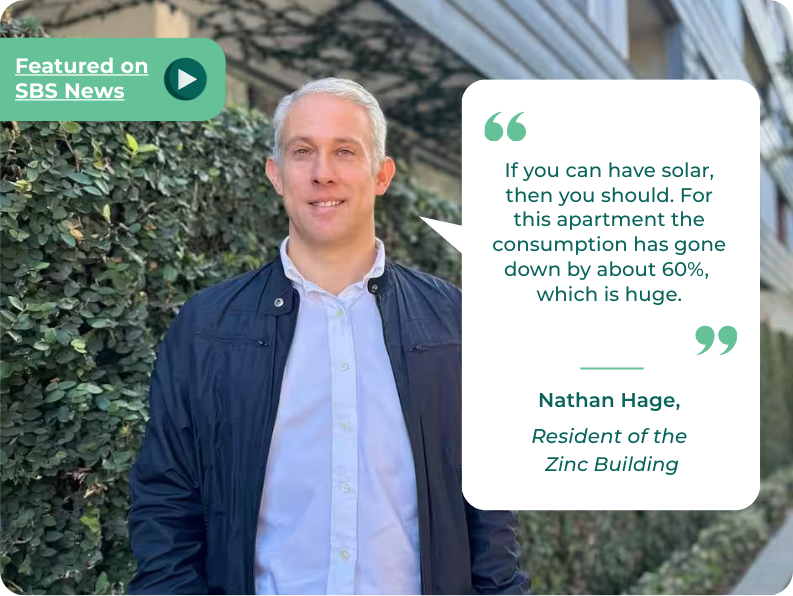
Over 4 million Australian households¹ and small businesses are now taking advantage of rooftop solar. Ask those homeowners, and they’ll tell you the same thing as Nathan: your energy bills could drop by up to 60%².
They might also tell you about the green benefits of reducing your CO2 emissions. A typical apartment using rooftop solar saves 1 - 2 tonnes of CO2 emissions per year, which means you’re doing the same job as a small forest of 50 - 100 trees.
Or they might also speak of how solar increased the value of their apartment. Asset values of apartments with solar increase by anywhere from 2.7³ - 12%⁴.
And yet, with all the benefits of rooftop solar and with installations booming around Australia, apartment residents often assume that solar is not available to them. Despite having roof space sitting idle, solar for apartments was always considered too hard-basket; there’s the issue of shared roofspace ownership, it can be technically complicated to install, practically complicated due to the involvement of multiple decision-makers and it’s expensive.
This guide is here to dispel those misconceptions and to provide you with a road map that covers the full picture of shared solar for apartments through the six steps to shared solar:
-
Step 1 - Start the conversation: Building momentum with your neighbours
-
Step 2 - Obtain a solar sharing feasibility assessment: Find out how shared solar stacks up financially and physically
-
Step 3 - Time to talk with the owners’ corporation: the OC facilitates the decision on shared solar
-
Step 4 - Get quotes from installers: Guidance on how to find installers and what a good quote typically includes
-
Step 5 - Decide how to finance the project: Investigate financing options
-
Step 6 - The vote: Steps to ensuring the vote will pass, and what happens next
The six steps will cover the technology and the process: from the first conversation you have with your neighbours to having the live system on your roof, quietly generating clean, low-cost energy.
Solar sharing is not only possible, but it is more achievable than you think.

The problem: why apartment residents think solar isn’t for them
Most of what people hear about solar has been focused on promoting installation on single-family homes, which has led to the misconception that installing solar on apartments must be too hard. Most of the prevailing myths can be grouped into three main categories.
“It’s too expensive”
Installing solar that serves an entire apartment building may seem out of reach. There are unique technical challenges of shared solar as well, which impact the cost.
When considering the financing and up-front costs, however, it’s also important to frame shared solar as an investment, one where costs are shared, and so are the rewards.
A fully installed solar setup typically costs between $3,500 to $4,500 per apartment. These costs also become more manageable when you consider the multiple financing options available plus government grants and incentives.
For example, one financing option utilises a budget that’s already available that is collected over time from the apartment residents. Called the capital works fund or sinking fund, there’s often enough budget available to cover the full cost of the installation.
Even if the capital works fund can’t fund the entire project and other financing is needed, the project payback period can be as little as one year, considering the savings on energy bills.
And in addition to lower energy bills, other benefits include lowering your CO2 output and a property value uplift of $75,000 per unit on average.
More on the financial side of the shared solar system can be found in Step 5 below - ‘Decide How to Finance the Project’.
“I don’t own the roof, so I can’t access solar”
It’s true, you don’t own the roof. The roof space of an apartment building is referred to as ‘common property’, which means that it is owned collectively amongst all apartment owners. This just changes the equation slightly: roof ownership is not required, but a collective agreement is.
The apartment owners in your building can decide, via a vote through your Owners’ Corporation (OC), to install solar panels on the roof and then share in the benefits.
Once the decision is made, shared solar technology in the form of SolShare from Allume comes into play. It’s the technology that takes a single rooftop solar system energy divided fairly across apartments. More on SolShare in the next section.
“The owners’ committee process is too hard”
Speaking of the OC, while it may seem like a black box that specialises in strange jargon, each one does have clearly set out processes for things like gaining agreement on a shared rooftop solar system, and the processes are more manageable than you would expect.
The work normally culminates in a vote amongst owners. Fortunately, a unanimous agreement is not required — in some cases, only 25% approval is sufficient to move forward.
Further, you’re not alone in navigating the OC. Allume has experience in guiding groups through the process, and we are available for support.
This guide covers working with the OC in more detail in the section below.
The solution: SolShare unlocks solar for apartments
There is growing momentum in Australia to make solar for everyone, including the estimated 2 million people in Australia living in low-to-medium-rise apartments. Part of this comes from government subsidy programs to promote installations, part from innovative technical solutions like SolShare.
Created by Melbourne-based Allume, SolShare is an Australian-made technology that makes shared solar possible in apartment buildings. It allows a single rooftop solar PV system to be connected to all apartments and uses hardware to fairly distribute the energy throughout.
SolShare has enabled nearly 10,000 people to gain the benefits of affordable, clean solar energy, including residents of the Waterline Crescent apartment complex in Queensland. Solar was retrofitted onto an existing building to serve 18 apartments and common areas, allowing residents to save over $500 per year on their electricity bills and 37.5 tonnes of CO2. Check out the case study here>.
How SolShare enables solar sharing
The SolShare technology has a number of key aspects:
- It physically splits solar energy via a hardware device installed alongside the building's existing electricity meters
- It distributes energy fairly between apartments over the course of each month
- It sends energy to residents when they need it, maximising solar self-consumption across the building
- Excess solar not used by residents is exported to the grid; when residents need more than the panels produce, the grid supplies the difference — seamlessly and automatically
- Residents can monitor their system's output and savings through an app
SolShare systems outperform individual systems
A SolShare-enabled system is actually more efficient than a standard rooftop solar system like those found on single-family homes.
In standard systems, unused solar is sent out to the grid for others to use. Your utility pays you what’s called a ‘feed-in tariff’ for giving them surplus electricity that they can then sell to other customers. Feed-in tariffs vary, but are generally low.
SolShare, however, maximises consumption which minimises electricity sent back into the grid. The brains of the system uses algorithms to route the solar energy where and when it is needed most. This increased efficiency increases the amount you save on your bills each month.
“I was actually a bit excited about opening up my new electricity bill, just to see if there were savings... It looks like I’ve saved about 50% on my electricity bills so far.”
- Alice, City West Housing, NSW
Interested in joining Alice and saving on your electricity bills, but don’t know where to start? Want to lower your carbon footprint like the residents of the Waterline Crescent apartments?
The next part of this guide is for you, where we lay out the six steps to having a shared solar system installed on your building.
The six steps to shared solar
Step 1 - Start the conversation
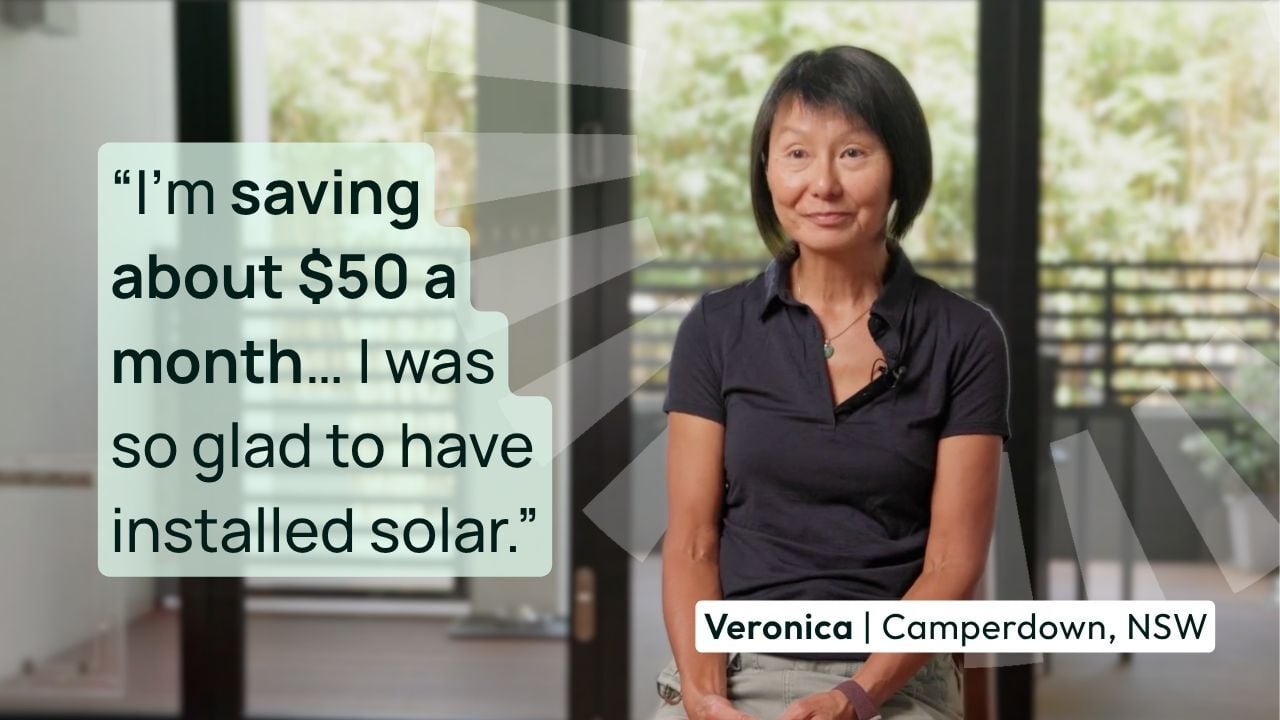
A solar sharing project is a community project, and starting a conversation with your neighbours is the key to success. Engaging with other residents and building support will result in momentum that will make the following steps easier, as you
- Find allies who can assist in the process
- Build support that can help translate into success when the project goes to a vote
- Identify people within your community who may have knowledge and experience that can assist
Getting started - who to approach first
Start simple by identifying one or two likely allies before going wider. If your first two contacts aren’t obvious, think about:
- Who in the building cares about energy costs?
- Has anyone mentioned sustainability?
- Who is already on the OC and may be able to provide some guidance on how it works?
- Is there a neighbourhood chat group that you could post to and query who is interested in solar energy?
- Does your building have a public notice board where you could invite people interested in solar to get in touch?
Starting small with an informal group of three or four people is all you need to get moving, and a group of any size is far more effective and persuasive and effective than a lone voice.
How to frame the conversations
Your neighbours are likely a wide variety of people who have different interests and differing levels of knowledge about solar energy. So make sure that you have a variety of messages to cater to those who value different things.
The financial case is strong, so lead with it. Shared solar can reduce energy bills by up to 60% on average. Solar also raises property values by an average of $75,000 per unit.
The figures do vary by state and building specifics, so some start by requesting a desktop feasibility assessment from Allume – refer to Step 2 below for more details on the feasibility assessment. By telling us a few details about your building, we can tell you roughly how much your system will cost and how much you'll save each month. Some people share this document with their neighbours and with the OC as a starting point.
Some find the environmental benefits are the more compelling reason to transition to solar, so have some information on hand about the potential CO2 reduction.
Ultimately, you are looking for supporters of all sorts - some who will simply give you their vote (we’ll get to that, in Step 6, others who are willing to take a more active role.
In all of your discussions, outline the benefits and the challenges, things like the extensive time it will take to go from building a team to having those first panels installed, and getting the project approved via vote. Honesty and transparency build trust.
Rallying support (and preparing for pushback)
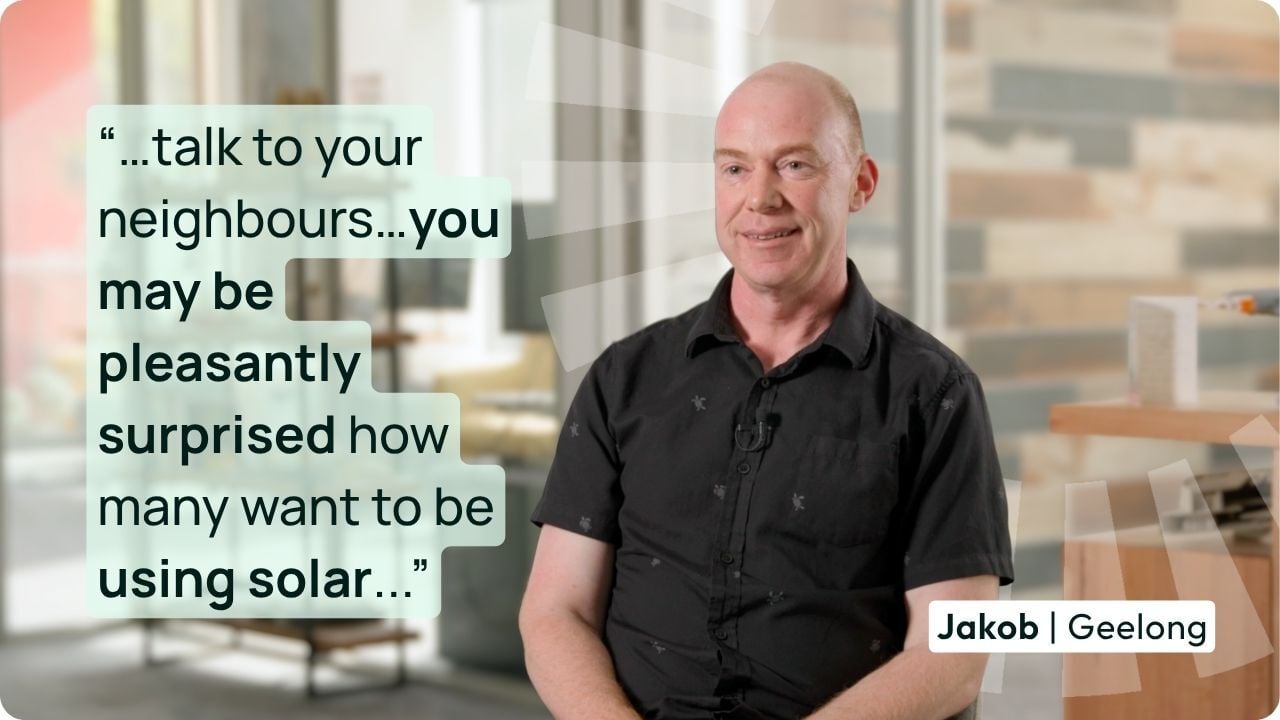
Typically, the majority will be on board - in fact, people are often surprised by how excited their neighbours are about solar! But not everyone you approach will be a supporter from the start. Some like to do their own research. Allume’s website has a number of case studies that provide more information on successful projects from around Australia.
You may get one or two who push back - don’t worry, this is normal. The finances speak for themselves so have the facts on hand (the next step will help you here!). We also have a guide for landlords, which explains the benefits for them, including property value increase and improved tenant retention.
Step 2 - Obtain a solar sharing feasibility assessment
Soon after starting to discuss solar with your neighbours to build support, there’s a key question to address: how does rooftop solar stack up, both financially and physically? This is where the generalities meet the reality of installing solar on your apartment building.
A feasibility assessment answers both questions. It also gives you evidence you need to have a credible discussion with the OC – that’s the next step. The hard numbers it will provide are more persuasive than enthusiasm.
The best part? Allume can do most of the hard work for you. Before we get there, it’s important to understand a bit more about feasibility assessments.
What’s included in a feasibility assessment?
A typical shared solar feasibility assessment covers the following:
- Roof size, orientation, and structural suitability
- Shading from neighbouring buildings, rooftop plants, or other obstructions
- The building's current energy consumption across common areas and individual units
- Recommended system size and expected output
- Projected savings per apartment and for the building overall
- Estimated installation costs, which will vary by system size and building complexity
Let Allume be your guide
Allume provides free, no-obligation feasibility assessments. When you are ready to get started, let us know, and we’ll be in touch.
Step 3 - Time to talk to the owners’ committee
Working with your strata committee is more straightforward than most people expect.
The OC is your ally
First, it’s important to note that the OC is a resource, not a gatekeeper. An early conversation will clarify the OC’s processes and build goodwill – both real advantages for your prospects.
They can advise on
- procedural requirements,
- help arrange for a special meeting if required,
- get a vote on the agenda,
- and ensure the proposal is correctly formatted for the meeting.
How the owners' committee works
The owners' corporation, aka body corporate, is your building's formal decision-making body for resident owners. In smaller buildings, all owners are members; in larger buildings (over 10 units), it's usually an elected committee.
OC involvement is required because shared solar involves common property, engaging an installer, and funding decisions — all of which need formal approval, typically by vote. Funding options are covered in Step 5 below.
The vote on a resolution to install solar passes with a certain percentage of votes. The percentage differs depending on your state of residence. Sometimes it can be as low as a simple majority (over 50%) of votes in favour, which is the case in New South Wales. Find out how voting works in our state-by-state owners committee voting guide.
Preparing for the meeting
This initial discussion with the OC may be an informal one to get the ball rolling, but there is some preparation you can do to ensure the meeting is productive.
Presenting your Feasibility Assessment is a great way to start. Hard numbers are persuasive and help to frame the decision about installing shared solar as one with financial benefits as well as environmental.
Come with a list of questions about the governance structure and decision-making process of the OC. Discuss the meeting schedule to see when a vote on shared solar would fit, or if a special meeting would need to be scheduled. And don’t be afraid to ask what concerns the OC may have about the proposal. Addressing the concerns of other residents is a great way to generate support.
Get Allume in the room
One of the best ways to have a productive meeting is to have Allume in the room. We can help present the Feasibility Assessment and also lead a Q&A session. We’ve helped unlock the installation of solar for apartments around Australia, and would be happy to make our expertise available to your meeting. Here’s where to go when you’re ready to book a Q&A.
“I first came across Allume about five years ago and have been following their work ever since. They’ve always been incredibly informative and supportive as our apartment block planned to install solar. Their team is generous with their time, knowledgeable, and genuinely committed to helping multi-owner properties go solar.”
- Esther Stuart

Step 4 - Get quotes from installers
The feasibility assessment paints a compelling picture of the financial and environmental benefits of solar energy; however, to help lock in the financing plan and get closer to sharing solar, you’ll want to talk to installers and get some quotes.
Cost is the most common reason projects stall, and the level of detail in installer quotes will help ease any worries the OC may have.
Finding solar installers
If you’ve already been working with Allume, we can introduce you to two to three accredited SolShare installers that we’ve worked with in the past and can vouch for the quality of their work and competitive pricing. We receive no incentive for these referrals.
You can seek out your own quotes as well. Online reviews can be used as a guide and a way to narrow down the pool. Comparison sites like Solar Quotes, which vet installers and provide recommendations, are also useful resources.
Aim for procuring two to three quotes total from installers that have been trained to install SolShare and who are accredited by Solar Accreditation Australia (SAA), the Australian Government’s accreditation scheme operator. This will ensure the installer uses industry best practices.
Once you’ve been in contact, installers will inspect your building and use market pricing for labour and materials to generate their pricing.
Evaluating quotes
Once you have the quotes, compare them for scope, experience, approach and price. Always read the exclusions and assumptions, as they help you to understand where risks lie and where the quotes differ.
Remember that the cheapest option is not always the best. Experience on your type of project, quality and reputation are important.
What a quote for an apartment solar system should include
There are a number of things that robust installation quotes should include in addition to a total price. They are:
- System size, panel specifications, and inverter type
- SolShare unit/s (the hardware that enables fair energy sharing)
- Any meter board or switchboard upgrade works — these must be included in the scope, not excluded or missing
- Connection, commissioning, and testing
- Timeline and site management approach during installation
- Warranty terms across panels, inverter, SolShare hardware, and workmanship
- Exclusions and assumptions
Take a proactive approach and request this information from the installer before they generate the quote.
Step 5 - Decide how to finance the project
So how are we going to pay for solar? Cost is often the biggest hesitation, but several financing options are available to help spread the load. Since these options are coordinated through the OC, having a working knowledge of them will make your conversations with fellow residents and at OC meetings much more effective.
Keep in mind that not only is the financing method important, but the timing is as well. Grants release funds in stages. Installers have payment terms. You’ll need to plan so that you have the cash on hand when you need to spend it.
Financing options are covered in greater detail in our blog “How to pay for solar in your apartment building”.
First is the option where everyone chips in, the special levy.
The Special Levy
A special levy is a one-off fee that the OC can raise to cover expenses like urgent repairs or major upgrades like shared solar. In this case, the cost of the shared solar would be split amongst the residents, either equally or based on lot entitlements, meaning those with larger apartments would pay more.
The split is something that should be agreed upon with the OC and made clear during the vote process.
Using the building’s Capital Works Fund
Also called a sinking fund, the capital works fund is money from residents that has been collected over time and has been saved for maintenance or projects.
The residents of your building can agree to pay for the shared solar system via the capital works fund. The capital works fund can also be tapped in combination with a special levy, which reduces out of pocket expense for residents.
Strata financing
It’s also possible for the OC to take out a loan to pay for shared solar. Some lenders offer strata financing products specifically for OCs funding capital improvements.
In this scenario, apartment residents then pay back the loan over time via increases to their regular levy payments. Strata financing can also be used in combination with the other funding methods. Repayments can be structured to be offset by the energy savings the building generates.
Government solar grants and incentives
Federal, State, and local governments offer a variety of financial assistance to support people in reducing their energy costs. This includes incentives targeted at rooftop solar for apartments.
The grant programs are changing all the time, so to find the most current programs, Energy.gov.au/rebates is a great place to start your search.
The Federal Government provides rebates on solar that reduce the upfront installation cost through small-scale technology certificates (STCs). Apartment solar is eligible, and your installer can help organise the STCs. More information is available at the Clean Energy Regulator website.
%20Large.jpeg?width=1280&height=960&name=Bulimba%20drone%20shot%20(1)%20Large.jpeg)
Step 6 - The vote
The groundwork is done. Now it comes to a meeting of the OC and the official vote.
Keep in mind going in the voting rules that were discussed in Step 3. Depending on what state you live in, the resolution to install solar could pass with just a few engaged owners voting in favour.
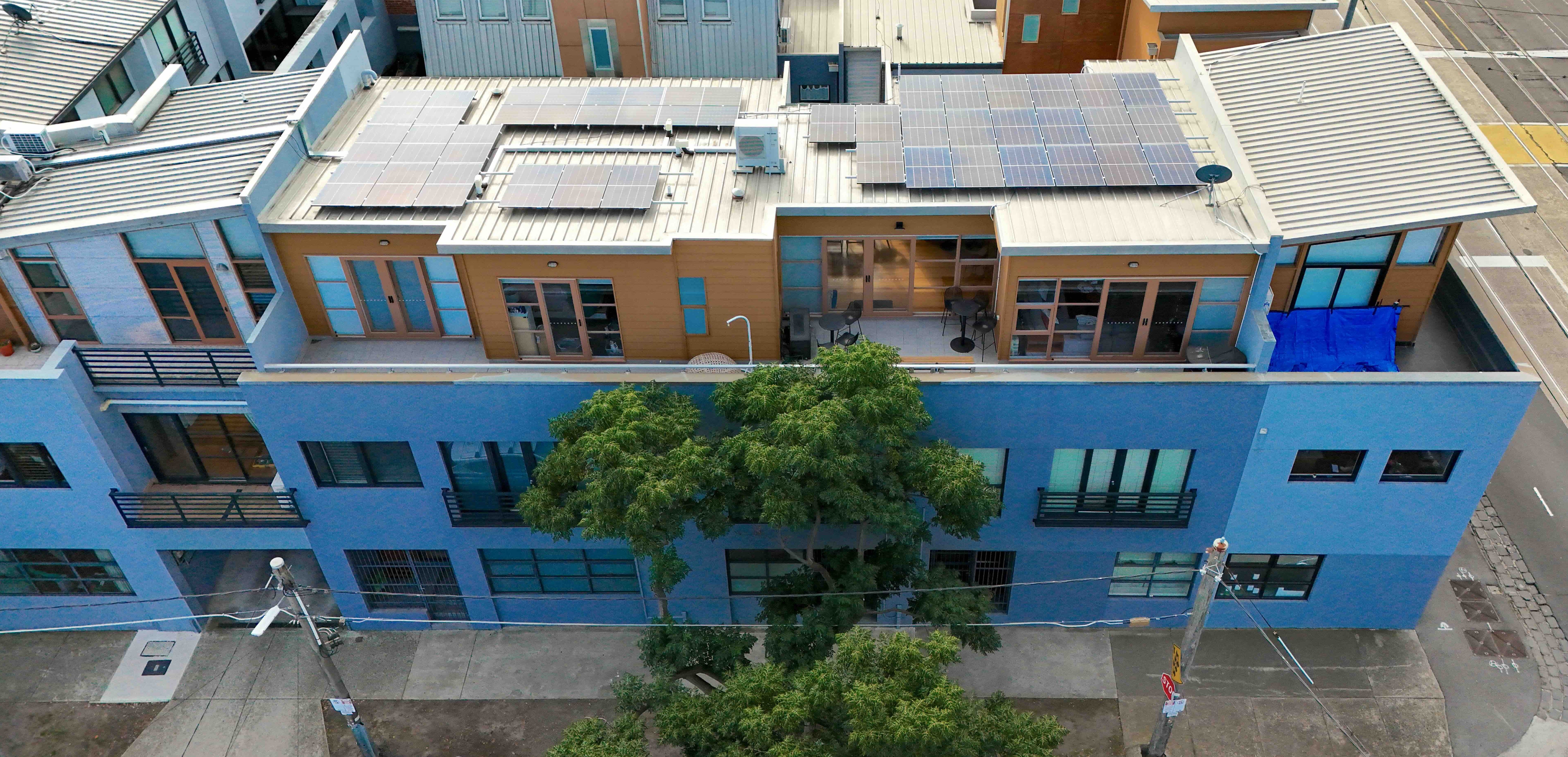
“From the initial consultation to the installation and certification of our 33 kW system, Allume was extremely helpful and guided us at each step. They attended our Special General Meeting to advise those attending the meeting about the solar and by doing that helped us pass the Special Resolution required.” - Luke Macartney
Setting the vote up for success
Information and transparency are key to a successful vote. If there are things that some residents do not understand about the solar proposal, they will either make assumptions or become sceptical.
Address this risk early by circulating a clear, plain-English summary to all residents before the meeting. The summary could cover:
- Information about the system and SolShare
- Total cost
- Cost per unit
- Projected savings
- Installer credentials
- Project timeline
Having all the details of the proposal in hand and seeing the benefits will make it easy for them to vote yes.
Once the vote passes
Congratulations! The hardest part of the process is done. But there is still work to be done before you start enjoying shared solar.
The next steps include engaging with the chosen installer and completing any grant applications that form part of the financing package. Once a schedule is locked in with the installer, this information can be shared with the other residents so they know what to expect regarding access, noise, and any temporary disruptions.
Start thinking about ways you and your neighbours can maximise solar savings, such as using your appliances during peak solar times – read all 5 tips for maximising your solar savings here.
Allume has also covered a range of top FAQs on solar for apartments here.
If the vote doesn't pass
A failed vote is possible, though if you’ve followed the six steps, this is rare. Treat it as a setback, not an endpoint. The most important thing you can do is understand why – what drove the ‘no’ votes, and then address those concerns.
This may mean having conversations with individual owners; it may also mean adjusting and updating some details of the proposal. Once this is done, make plans through the OC to retable the proposal at a future meeting.
Bring solar sharing to your apartment
Solar energy for apartment residents is not only possible — it's more achievable than most people think. The six steps in this guide are the roadmap: the same one Nathan Hage used to cut his consumption by around 60%, that Alice used to save around 50% on her electricity bills, and that Jackie and Rod from the Folia Apartments in Victoria followed to the point where they now enjoy genuine energy independence.
When you're ready to find out what shared solar looks like for your building, Allume offers a free, no-obligation feasibility assessment - request yours here.